LearnWPT Student Bryant Getting Results...

LearnWPT Platinum Member and Live Workshop Student Bryant Morrison has been putting in the work and seeing big results at the poker tables!

Bryant recently conquered a field of 322 players to win his first WSOP Circuit Ring in the Seniors Event at the Choctaw Durant stop.

The $250 buy-in tournament generated a $64,400 prize-pool and as victor, Bryant was awarded $13,948 and a coveted World Series of Poker gold Ring.

We asked Bryant about his recent win, how LearnWPT has helped his game, and more…

Bryant Morrision - WSOP Ring win - optmizd.jpg

LearnWPT: Do you play many live tournaments? Why did you pick this specific event to play?

Bryant: I only play live tournaments but I practice at LearnWPT.com using the GTO trainer more and more now. I do not play cash games to speak of unless I am waiting for a tournament to start.

I chose the Choctaw event because it fit my schedule during the Christmas break. I play WSOP in the summer, again on break, and this circuit event was close enough to drive to.

LearnWPT: You’ve attended two LearnWPT Live Workshops. How would you say these live events have helped your game?

Bryant: Both workshops added to my understanding of the game on a theoretical level. I constantly refer to handouts even now as I develop a playing strategy for different situations. Being able to ask questions and listen to other player's questions greatly increased my knowledge of the game. The best time for learning at the second workshop was the laboratory work where we all played our hands openly with the instructors advising and critiquing our play. That one day is worth all the money in [my] opinion.

Bellagio - Chewy - Bryant.jpg


The greatest take away from both workshops was the fact that they made me reconsider what my game was doing. Then, after working at home to unscramble my brain, my game would improve to a better understanding of certain aspects of the game that I was repeatedly seeing at the tables.

LearnWPT: How often do you use LearnWPT.com to improve your game? What specific features do you like about the online training site?

Bryant: About 6 weeks before I go to a tournament setting I begin to use LearnWPT.com extensively, every day if possible. I am not a professional so I have to plan when I can play and that includes when I can practice as well. Right now I only play at 2 times a year: WSOP summer and any circuit events during Christmas break. I might add Spring Break this year to that schedule since there are now more WSOP circuit events planned.

I have created my own constantly updated index of all the episodes so that I can drill into any specific element of poker. Using this index I can review cbetting, 3rd bullets, stack to pot ratios, speculative calling, exceptions to these rules, and many other situations that might confuse me at the table. Having these episodes available 24/7 at my beck and call has proved tremendously useful to keeping my play sharp. If I had to learn this at the tables through actual play I would never be where I am now.

Bryant quote blue 2.png


This most useful element of the website has been the addition of the GTO trainer. I did not enjoy it at first, constantly being graded down with losing points for errors, until I understood the tool’s usefulness. I am not supposed to win; I am supposed to develop a pattern of play that minimizes my losses in each different scenario.

Then, later at the tables, when I recognize the same situation, I will know the proper move based on stack size, position, stack to pot ratio, and the other factors taught at the workshops. Then it is up to me to decide whether it is the proper moment to DEVIATE from perfect play to maximize my exploitation of the situation. It is at that moment in the tournament that the training pays off: you realize your opponent is just not that good after all. Viola! The chips slide your way. Next hand please!

The GTO trainer never makes a mistake so you know you are learning the proper action EVERY TIME. Build knowledge off of that and table play becomes much more readable.

LearnWPT: Can you name a few specific skills or techniques from the LearnWPT game plan that helped you win this WSOP ring? Can you talk about how or why they helped?

Bryant: One of the basic skills reinforced at LearnWPT.com and the workshops is thinking of stack size as BBs and adjusting your play accordingly. Knowing where you are in the tournament helps make decisions so much easier. If it is time to shove all in with A2o (my winning hand) then make the play.

In my specific winning hand my opponent had 8 bbs left... I knew he had to be pushing ALL IN with wide open ranges so when I had the A and was only risking a few more bbs to end the tourney my second card was less relevant to me. A in the window and the ring was mine.

Listen to what Bryant had to say back in 2018 during his first LearnWPT Live Workshop...

I would never have thought like that before LearnWPT. My cards would have been the most important item in my equation. Instead, looking at the stack sizes, position, time, stack to pot ratio, reads, and the reward my call with a weak A was practically automatic. Move the clock back and his stack is larger proportionately so the call would be less likely but with only those few bbs left it was an opportunity I could not pass up. I doubt I would ever have thought about poker like this without training at LearnWPT.com.

LearnWPT: $13,948 for a $250 buy-in is an impressive return on investment. Do you have any plans for future tournaments? Where will we see you next?

Bryant: Future tournaments will be WSOP summer events that fit my schedule. The money is not the motivation; the competition is. $1000 buy-in at WSOP returns hundreds of thousands and the higher events, with higher skill levels, return more. The math is the same for ROI but the “life changing” amounts are not going to appear for me. I am already settled into the retirement life style, just not completely yet.

Look for me at WSOP in the summer events but hopefully you won’t recognize me and future I am just an old timer, the OMC type, who is just playing his cards as he gets them. ABC with a little luck, that’s what I want you to see when you see me. Meanwhile, back at LearnWPT.com I will have put in multiple hour days on the trainer, updated my index, reviewed and drilled certain elements, attended another workshop (probably, based on schedule), and hopefully added a few more tools to my war chest.

LearnWPT: Do you have any advice for players trying to learn and improve their No-Limit Hold’em game?

Bryant: The key to improving is to actually use the tools you have. Playing is one way but it is slow, expensive, and time consuming. The GTO trainer is on all the time and is free with unlimited use when you buy into the monthly program. You can even but in, practice, play, resign and come back later when you plan on playing your next tournament with no penalty. Thus, you can plan your own time instead of having the tournament schedules run your life. Your wife and family will appreciate your presence in the “off” seasons.

Bryant blue qt 1.png


While I also suggest a workshop they are expensive and will “break your game” until you recollect your thoughts and adjust to what the new information gives you. Well worth the time and money but be prepared to have at least a week off after the workshop to work the material into your game before you play. Now I may be slow and perhaps you can adjust faster than this poor old man but you do need some time to change your game.

LearnWPT: Aside from poker, what else do you do for fun?

Bryant: Ahhh… the back-story, personal part of this interview. As a window into my life let me summarize by saying that in my long life I have not been idle. I have practiced law, taught history (still doing this one), piloted my own aircrafts with a multi-engine instrument commercial license, instructed accelerated freefall skydiving with over 1,000 jumps, scuba dived to a depth of 350 feet on a salvage attempt, sailed the Caribbean as a bareboat charter captain, raced downhill slalom (very briefly), written 6 books (4 published), traded commodities, played golf down to a 12 handicap, raised 2 children to be better than me, kept a wife 12 years younger than me happy for the past 30 years, and besides just playing poker I now find pleasure in studying and practicing the game. And I’m not done yet!

Congratulations


As an educator, Bryant understands the importance of study, the effort needed to improve your game, and mental fortitude to be successful in poker and life.

Bryant is a true student of the game and we couldn’t be more proud of his accomplishment. We can't wait to see what is in store next for Bryant.

Have a success you’d like to share? Let us know by emailing the LearnWPT Team at [email protected].


LearnWPT-Poker-Training

When we created LearnWPT.com our goal was to provide a place that empowers players to ask questions, help get them focused, and provide the tools for a solid game-plan to bring to the table every time they sit down.

Some of the ways we accomplish this is by:

  • Empowering Students to train, practice, and play on the WPT GTO Trainer to get real EV loss of their play to help find leaks fast
  • Hosting 2-Day and 3-Day Live Workshops for Students to learn and interact with the LearnWPT Instructors in person
  • Teaching and presenting examples of proven, winning concepts through our Strategy Episodes (instructional videos)
  • Providing a place where Members can send questions to receive answers and guidance with the Ask a Pro Feature and Community Forums


Not a Member?
Click below to join (just $5 your first month!) and start improving your game today:
Poker Quiz! 3-Betting From the Small Blind With J♠J♣ ...

3-Betting Small Blind With JJ

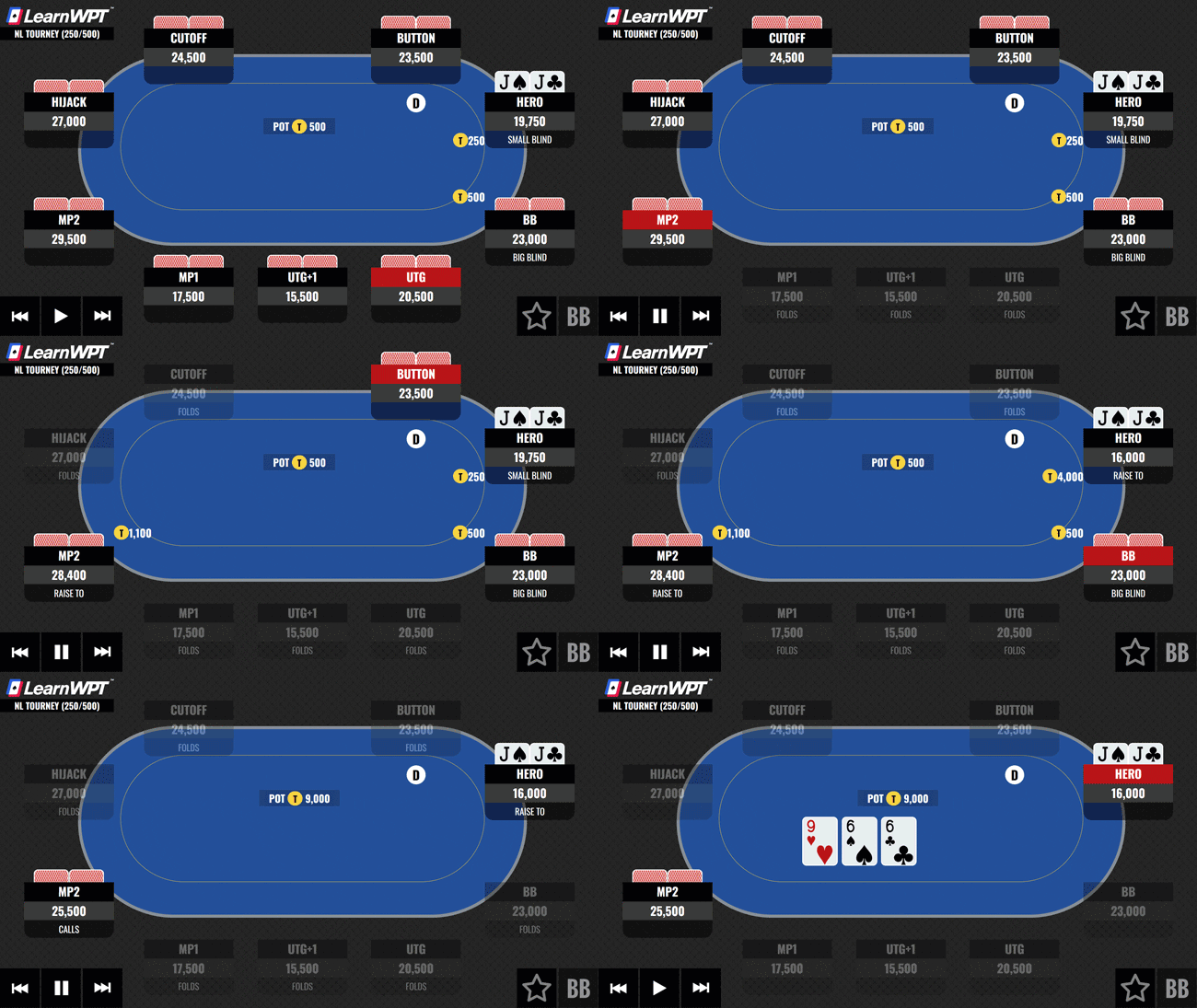
DECISION POINT: You’re playing a daily tournament and late registration is still open. The blinds are 250/500 with a 500 big blind ante. A player in Middle Position raises first-in to 1,100 and it folds to you in the Small Blind with J♠J♣. You 3-bet to 4,000, the Big Blind folds, and the original raiser calls. The flop comes 9♥6♠6♣ and action is on you. What do you do here?

PRO ANSWER: We're playing in a daily tournament. Late registration is still open and the blinds are 250/500 with a 500 big blind ante. We are dealt J♠J♣ in the Small Blind and the action folds to MP2 who opens to 1,100 chips. Everyone else folds and action is on us.

Out of the Small Blind we prefer to reraise with a linear range, meaning that we will be reraising for value with hands that are ahead of our opponent’s range. Our opponent in Middle Position should be opening with around 25% of total hands as the first-in raiser.

Our jacks are well ahead of that range, so they would be a part of a linear 3-betting range. Typical 3-bet sizing will be around 3x the opening raise size, but since we will be out of position the remainder of the hand, we want to reraise a bit larger to make up for the positional disadvantage. We elect to make it 4,000 chips and our opponent calls.

The flop is 9♥6♠6♣ and action is on us. As the preflop 3-bettor we have a large range advantage on this flop and have all the big overpairs in our range. MP2’s range consists mostly of bigger suited cards and middle pairs, most of which don’t connect very well with this board. Since we have such a tremendous range advantage, it is ideal to c-bet with our entire range.

Typically, we utilize a smaller bet size when c-betting our entire range. However, this situation is unique. The stack to pot ratio (SPR) is just under two. With so much money in the pot in relation to our stack, some hands in our range start to really benefit from protection.

In this case, our really strong hands like AA/KK and semi-bluffs, such as AKo/AQo type hands, prefer to bet around 25% of the pot. Our more vulnerable hands, like TT/JJ and A9s, want to bet a larger sizing of around 50% of the pot in order to protect against many of the potential overcards that connect with MP2’s range.

Betting half of the pot is the best play.

How would you play it?
Share your answer in the comments section below!


Start Playing Better Poker With LearnWPT

Whether you’re brand-new to poker training or are an experienced student, a Membership to LearnWPT.com is your chance to learn from world-class professional poker players in a friendly community using state-of-the-art tools.

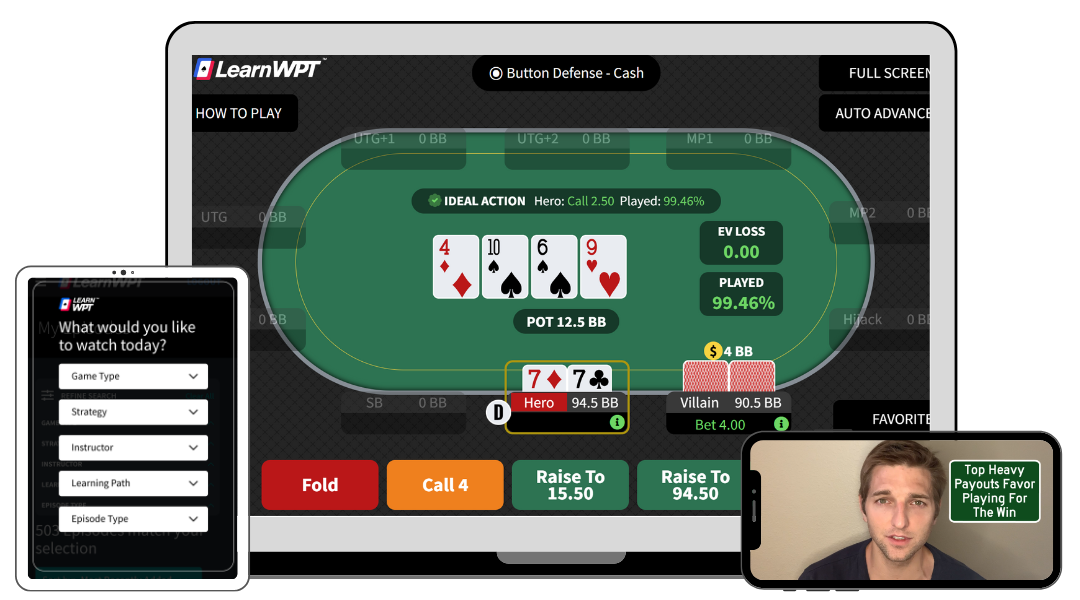
Site Features - Multiple Devices Mockup

Join now to get started, and you'll immediately gain access to the LearnWPT training features, including WPT GTO Trainer packs, 550+ strategy videos, downloadable tools, Ask a Pro Discord, and more!

Have Questions about LearnWPT? Send an email to our Support Team at [email protected] or click the red CONTACT US button.

Tournament Preparation Study Session: Preflop Strategy

Warm-Up Strategy Session - Preflop


Ready for your championship run?
LearnWPT is here to help with a free, six-part tournament preparation series built to sharpen your skills and build your confidence before you ever sit at the table.

In this post, we dive into Preflop Strategy, one of the few elements in poker you can control absolutely, and arguably the most important.

Your preflop decisions set the stage for your entire stack. Knowing which hands to raise first-in with and how to adjust based on stack depth and position is the bedrock of winning tournament poker.

Let's get started building a winning preflop game plan ...


Preflop Strategy Warm-Up Session

Knowing how and when to make moves preflop is essential to building a chip stack in tournament poker. Relying on “feel” alone when deciding to bet, raise, or call is not a reliable path to long-term success. Your decisions need to be grounded in proven strategy.

In this session, LearnWPT Instructors Eric "Rizen" Lynch and Michael "Gags30" Gagliano focus on the one decision you must make in every hand you play - what to do when the action is on you preflop. They’ll also break down how to apply pressure with 3-betting and give you tools to gain a skill edge on your opponents.

💡Member tip: Watch all previous study sessions anytime from the Webinar Dashboard.

Have preflop strategy questions? LearnWPT Members can talk directly to the LearnWPT Pros in our Ask a Pro Discord!


Know The Basics: Start With The 5 Keys 🔑

Strong preflop play isn’t just about memorizing hands, it’s about mastering the why behind your decisions. To play optimally, you should think about these 5 Key Factors every time you act and they will guide your decisions on later streets:

  1. Always be aware of your and your opponent's Position
  2. Know the Effective Stack in terms of big blinds
  3. Assign Preflop Ranges (not just a specific hand) based on each player’s position and how they entered the pot
  4. Note the Number of Opponents seeing the flop
  5. Understand the Board Texture and how it affects your next move


Get these 5 Key basics down pat by watching these four episodes:

The 5 Keys Of Poker Tournament Strategy Quick Tips:

To build mental muscle memory for these concepts in real-time, focus on the 5 Key Factors even when you are NOT in the hand. Notice hands that were shown down, you’ll find an interesting trend...

  • The more players that see the flop, the stronger the average hand will be at showdown
  • The more coordinated a board is, the more likely it is someone has a strong draw or made hand as more chips go into the pot
  • Multiway and Coordinated? You’ll likely see the strongest possible hands in a player’s range at showdown


🛑 Know Your First-In Hand Ranges

Tournaments force you into dozens of stressful decisions, and staying present while focusing on the 5 Key Factors can be the difference between a deep run and an early exit. Remove distractions by reviewing GTO-based first-in hand ranges daily. As you build muscle memory and quickly know which hands to raise with from different positions, your preflop decisions become easier, reducing decision fatigue and keeping your mind sharp for tough postflop spots.

Watch this Episode from Nick Binger as he gives you a detailed breakdown of which hands you should play from each seat position when raising first-in to the pot. Knowing what hands to act with preflop from early, middle, or late position is crucial to your success!

Here are a few points from this Episode to remember...

Think in Hand Ranges:

  • A range includes all hands a player may have in a given situation
  • Avoid trying to put your opponent on a specific hand
  • Position, action, and stack depth help determine ranges
  • Analyzing hand ranges is best done away from the table

GTO First-In Hand Ranges - Tournaments


Download a copy of the GTO First-In Hand Ranges

Use these rock-solid GTO hand ranges and you'll be well on your way to a deep championship run. These charts will tell you what hands to play when you are the first person to put money into the pot at the poker table. They'll keep you on very solid, profitable ground.

Quick Tips For Using the First-In Hand Range Charts:

  • Use the Position Graphic to determine your position at the table and reference the appropriate range chart for your seat. Tip: Count backwards from the Button to determine your position.
  • Raise with all hands highlighted in PINK. Do not call the minimum bet amount - RAISE!
  • Your raise sizing should be between 2.3 and 3 times the big blind amount depending on stack depth.
  • Be consistent. If you raise a larger amount with a specific hand and smaller amounts with others, you will be easier to read at the table (IE don't raise to 600 with AA, but 400 with 99)

You'll develop muscle memory for preflop play by simply reviewing the charts and putting them into practice at the table!

Not a LearnWPT Member? Join now for just $5 your first month for more Strategy Episodes and downloadable tools.


Improve Your Game With Team LearnWPT

Whether you are brand-new to poker training or you’re an experienced student, this is your chance to learn from world-class professional poker players in a friendly community using state-of-the-art tools.

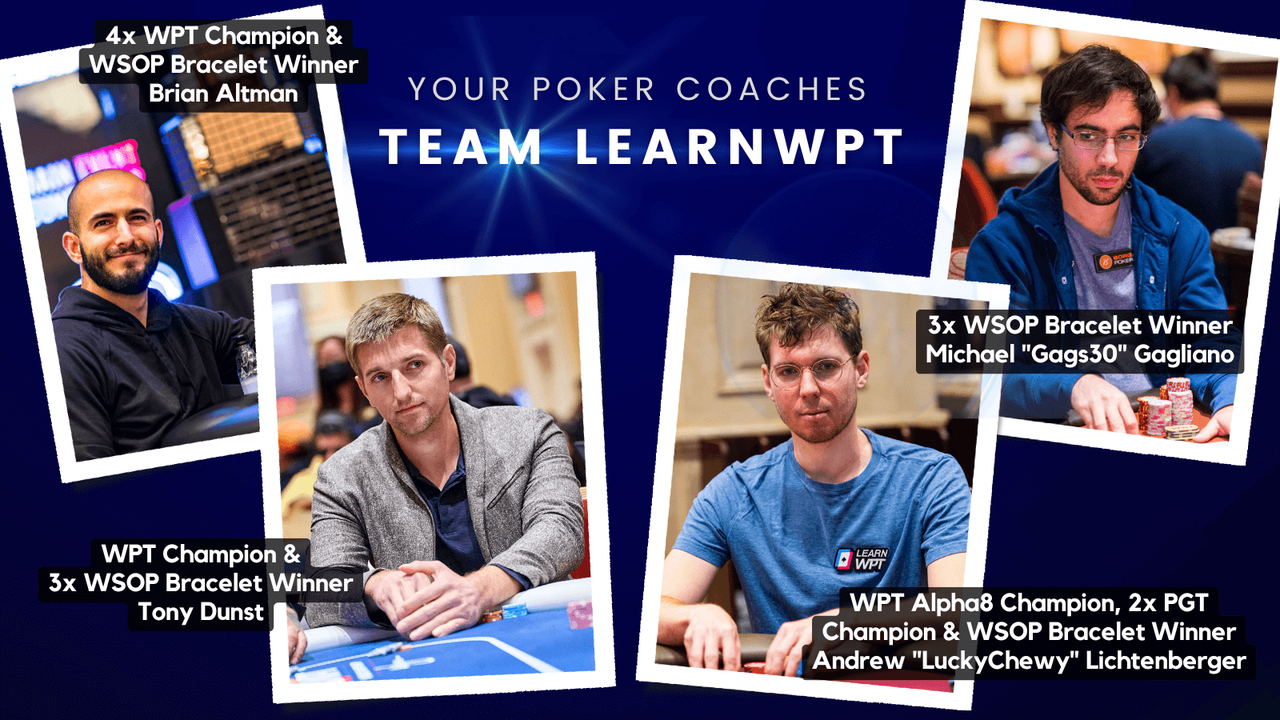
LearnWPT-Instrutors-Altman-Tony-Gags-Chewy

Become a LearnWPT Member today (for just $5 your 1st month) and join our monthly LIVE Study Sessions, gain access to over 550 Strategy Episodes, drill hands with the WPT GTO Trainer, and more!

Have Questions about LearnWPT? Send an email to our Support Team at [email protected] or click the red CONTACT US button.


LearnWPT-Poker-Training

Train → Play → Think → Like a Pro

Poker Quiz! In a 3-Bet Pot With A♠J♠ Facing a C-Bet, Your Move?

Facing a C-Bet With AJ in a 3-Bet Pot


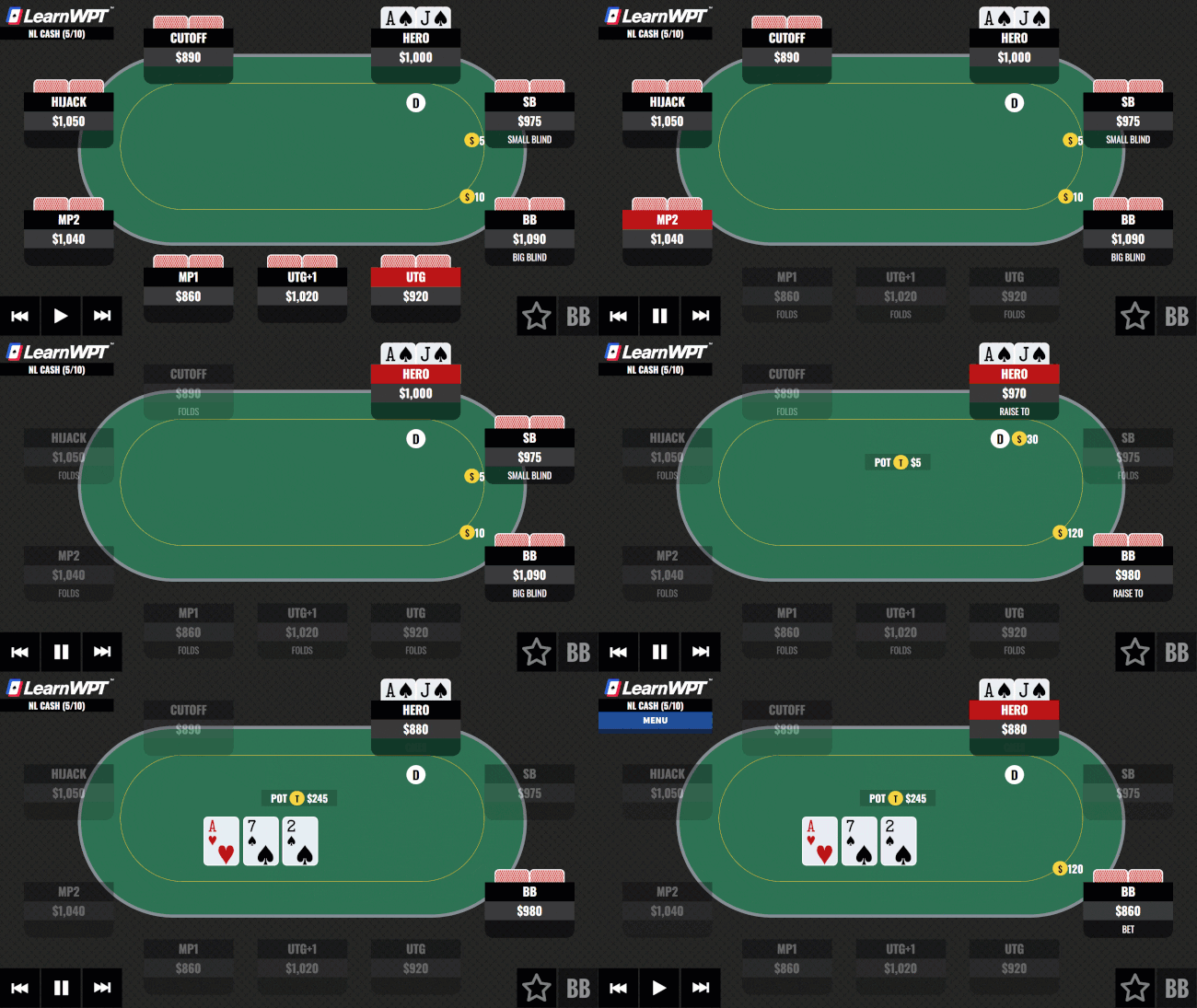
DECISION POINT: You are about 20 minutes into a live $5/$10 cash game session where most of the stacks are around 100 big blinds and you have $1,000. Action folds to you on the Button and you make the table standard raise to $30 with A♠J♠. The Small Blind folds, the Big Blind 3-bets to $120, you call. Your opponent bets $120 on the A♥7♠2♠ flop and action is on you. What do you do here?

PRO ANSWER: We’ve just recently joined a 9-handed $5/$10 cash game. Most stacks are around 100 big blinds and we start the hand with $1,000 and A♠J♠ on the Button. Action folds around to us, and with AsJs we have a hand that is certainly strong enough to open with first-in to the pot from the Button, so we make the standard table raise to $30. The Small Blind folds and the Big Blind 3-bets to $120.

When the Big Blind 3-bets, they are representing a very polarized range. This is especially true as the Big Blind is in a favorable spot to call with many hands since they are getting a great price to call and are guaranteed to see a flop as the last player to close the action preflop. Our specific hand AJs is strong enough to continue with, however not strong enough that we want to 4-bet.

We call and the flop comes A♥7♠2♠. This is about the best flop possible when we make only 1-pair in this scenario. If the Ah were the Jh we might feel slightly more confident in this spot since the Big Blind's 3-betting range has many more Ax hands than Jx, however we are still pretty happy on this Ace high flop with 2 low cards.

Our opponent comes out firing, making it $120.

Continued below...

StaticAd-Episodes-300x250-version2

The first step in deciding our best approach to this c-bet is to consider the Big Blind’s likely range. We can assume they 3-bet preflop with a range including a lot of big Ax hands, some bigger pocket pairs, plus some smaller portion of suited connectors and other hands to balance out their polarized preflop range. This is a very tempting spot to raise, and doing so certainly is +EV.

However, taking a closer look at the Big Blind’s range we can assume if we raise they are likely to only continue with the Ax hands that have us outkicked, or hands such as 77/A7s. We have very little reason to protect ourselves against the Big Blind's TT-KK type holdings, and if they have complete air we would welcome them to continue bluffing on future streets. Continuing by calling allows us to keep weaker hands in the Big Blind’s range that might continue to bluff, and gives us a great price to draw when we are behind.

While we might be faced with some trickier turn and river decisions when we call and don’t improve, calling will maximize our expected value against their entire range.

Calling is the best play.

How would you play it?
Share your answer in the comments below!


Start Playing Better Poker With LearnWPT

Whether you’re brand-new to poker training or are an experienced student, a Membership to LearnWPT.com is your chance to learn from world-class professional poker players in a friendly community using state-of-the-art tools.

Site Features - Multiple Devices Mockup

Join now to get started, and you'll immediately gain access to the LearnWPT training features, including WPT GTO Trainer packs, 550+ strategy videos, downloadable tools, Ask a Pro Discord, and more!

Have Questions about LearnWPT? Send an email to our Support Team at [email protected] or click the red CONTACT US button.

What Is C-Game… and Why Is It Wrecking Your Results?

Every poker player has an A-Game. It's the sharp, focused version that makes winning decisions.

But then there’s your C-Game...

Your C-Game is the collection of bad habits that turn into unnoticed, repeated mistakes. They're automatic, and they cost you more than any unlucky river card ever could.

✅ Calling too wide when facing a 3-bet “just to see a flop”
✅ Betting half your stack when a smaller sizing would do
✅ Leaving value behind by betting too small
✅ Guessing which hands to open from one orbit to the next
✅ Having no plan and constantly asking “what now?” mid-hand

These leaks might feel small in the moment - but across hundreds of hands, they quietly bleed your bankroll dry. Even worse, under pressure they become your default mode.

Here’s the real danger:

If you don’t crush your C-Game now, it will show up when it hurts most... during deep runs, final tables, and your biggest buy-ins.

That's why we built the C-Game Crusher 2-Day Virtual Workshop.

learnwpt-c-game-crusher-instructors-tags-v2

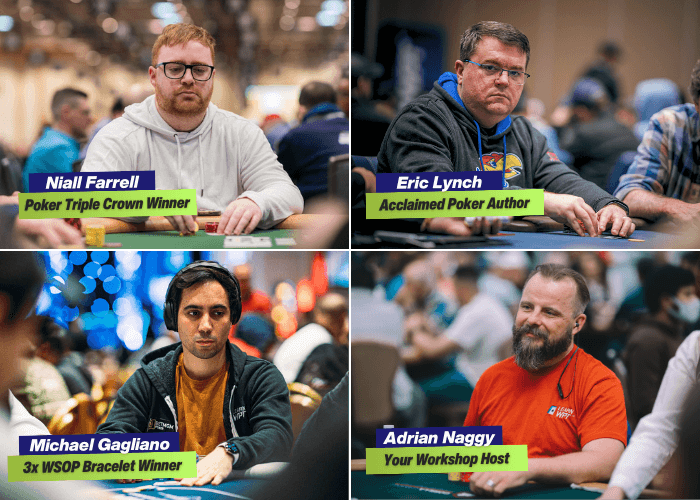
On September 20 & 27, world-class pros Niall Farrell, Michael Gagliano, and Eric Lynch will cut through the complexity and give you simple, proven strategies you can apply immediately.

Here’s what you’ll take away:
✅ Shorthand rules so you don’t need to memorize endless charts
✅ Guidelines for adjusting to different opponents and situations
✅ Bet sizing frameworks that simplify decisions
✅ Simple 3-betting shortcuts to handle preflop spots
✅ Default betting lines for common scenarios
✅ Connected flop → turn → river planning to avoid guesswork
✅ River techniques that eliminate hesitation and second-guessing

When you have a clear, simple plan, your confidence skyrockets and hidden leaks stop costing you chips.

Registration closes September 18th and seats are limited.

The truth is simple: You can’t reach your true potential until you fix what’s dragging you down. Your C-Game won’t fix itself, but you can.

Let's work on your game,
- The LearnWPT Team


C-Game Workshop Details at a Glance:

C-Game Crusher Workshop - Limited Seating-v2

Attend two sessions full of easy to implement strategy, interactive discussions, and elite insights from world-class players and teachers - all from the comfort of your home.

Dates: Saturday, September 20 & 27
Starting Time: 11 AM PT | 2 PM ET
Duration: ~ 5 hours per session
Where: Virtual—attend from home!
Taught by Niall Farrell, Eric Lynch, Michael Gagliano, & Adrian Naggy
Price: $997 - (SAVE $300*) = $697

BONUS: Lifetime access to session recordings, downloadable charts, and a private Discord forum for follow-up questions. Even if you can’t attend live, you won’t miss a thing.

Have questions? Email our Support Team at [email protected].


*Discount taken off the $997 list price. Offers and discounts can not be combined. See our Terms.

Poker Quiz! What's Your Move Here With A♣Q♦ Vs Loose Regs?

button-with- aq- vs-loose-regs

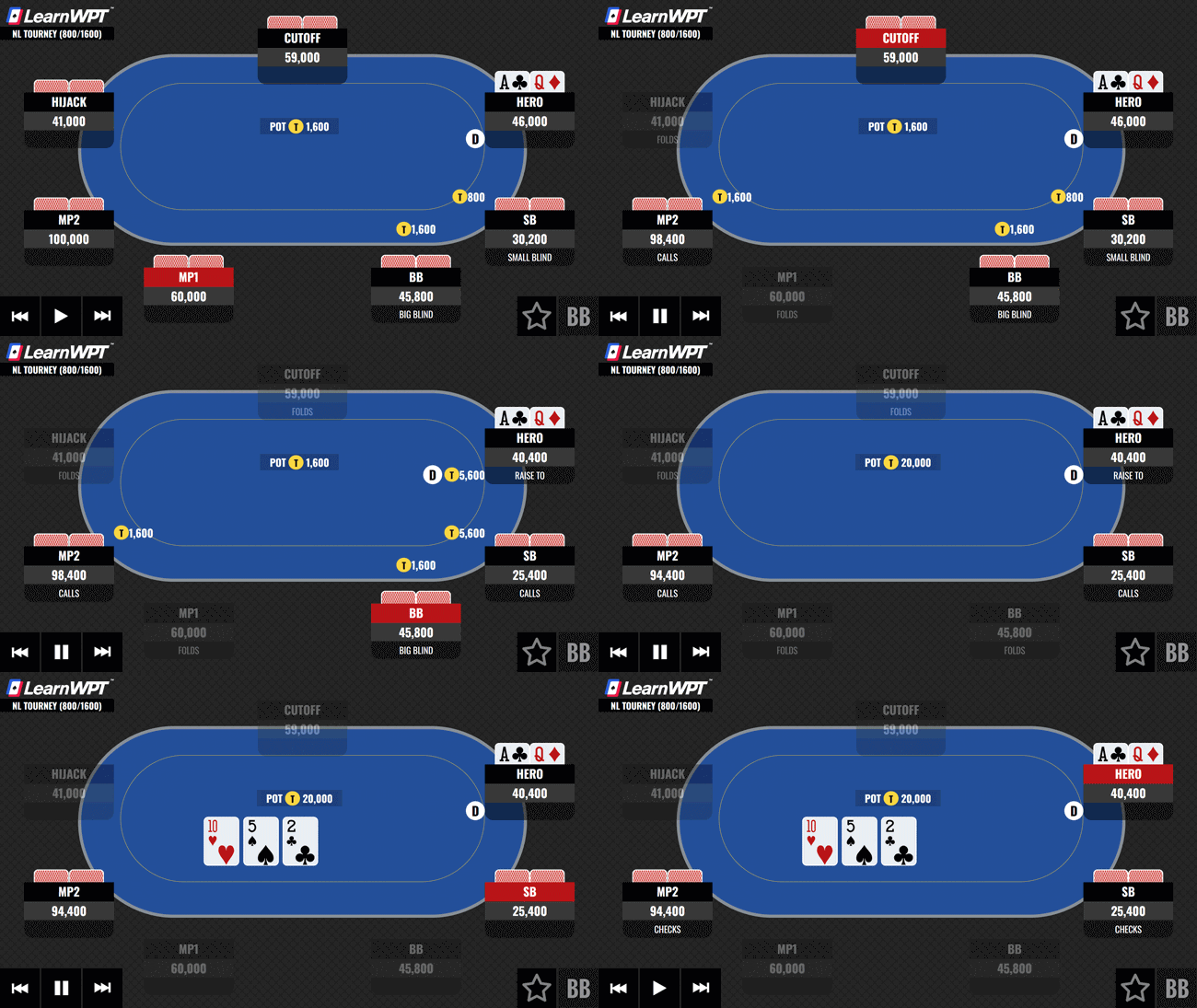
DECISION POINT: You’re playing a local daily tournament with a table full of regulars. Action folds to a player in MP2 who often limps to see flops but plays preflop fairly straightforwardly, and they limp again. It folds to you on the Button, and you raise to 5,600 with A♣Q♦. The Small Blind, an active player who likes to splash around but plays postflop well, calls. The Big Blind folds and MP2 calls. The flop comes T♥5♠2♣ and both opponents check.

Action is on you, what's your move here?

PRO ANSWER: We are playing a local daily tournament with many familiar faces. The blinds are 800/1,600 with a 1,600 big blind ante. We recognize the player in MP2 as being a very loose player who likes to limp preflop and see flops, but tends to play relatively straightforward postflop. The Small Blind is another player who likes to splash around a lot, however they are extremely tricky postflop often trying to make up for a wide preflop calling range by winning more than their fair share of pots postflop.

We are dealt A♣Q♦ on the Button and it folds to the MP2 player who limps. Everyone else folds to us. This is a great spot for us to isolate a wide open limper while in position with a hand that figures to be well ahead of MP2’s range. The default bet size is 4,800 at this stack depth to isolate the limper, but with the splashy player in the Small Blind we elect to make it 5,800 in an attempt to shut them out of the pot. The Small Blind still decides to call and MP2 calls as well.

The flop is T♥5♠2♣ and both players check to us. It can be tough to put both our opponents on accurate ranges since we’ve observed they both can call quite wide preflop. One question that is fairly easy for us to answer is what our opponents are unlikely to have. If either MP2 or the Small Blind had big cards like AK/AQ or big pairs such as JJ+ they likely wouldn’t have just called preflop. This condenses both our opponents ranges to have a lot more small to mid pairs and middling connected and/or suited cards. Those types of hands connect very well with this board.

We could potentially go with a plan of betting here and just going with it against the tricky Small Blind who is relatively short, figuring we have more than enough equity against them and then folding if MP2 continues knowing they play straightforwardly. If this were a cash game, that might be a profitable plan. However in tournaments, ICM makes it so that the chips we win are worth less on average, than the chips we are risking. That makes betting in this spot less appealing.

If we choose to check we're going to get a lot of information on the turn. Ace high is rarely the best hand 3-ways, but any queen or ace likely gives us the best hand and any three, four, jack, or king also gives us an inside straight draw. In addition, with this configuration it is highly likely that when action checks through on the flop the Small Blind will stab with a very wide range on the turn and the player in MP2 will react very honestly with their hand. When MP2 folds to the turn lead we may often be able to continue against the Small Blind’s stabbing range. In the instances when MP2 calls we can often safely get out of the way, assuming we didn’t turn an ace or a queen or are getting proper pot odds with a draw plus overcards.

This is a dry board that can be very tempting to continuation bet into two players. With the given player configurations and tendencies however, it is unlikely to work the required amount of the time to be profitable. Additionally, checking against this specific player configuration will give us loads of additional information on the turn to make far better decisions.

Checking is the best play.

How would you play it?
Share your answer in the comments below!


Will YOU Be Our Next Bracelet Winner?

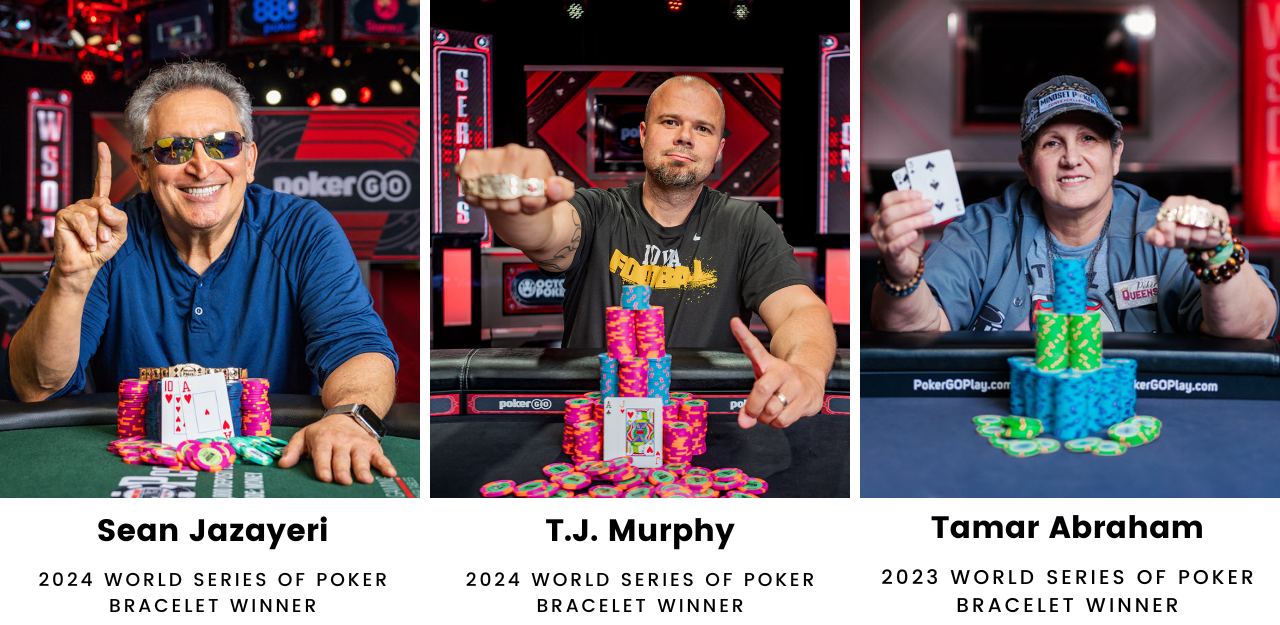
LearnWPT Students consistently crush the Summer Poker Season (including 2 WSOP Bracelets in 2024!) bringing home massive scores and achieving their poker dreams.

WSOP Success 2023 and 2024 - Sean-TJ-Tammy

In fact, in just the past 3 years alone during the summer in Vegas LearnWPT Students have achieved:

🥇 4 WSOP BRACELETS (not 1, not 2, not 3, yes 4!)
🏆 6 WSOP Final Tables
💪 1 Around Town Win
👏 9 Around Town Final Tables
💰 Over $1.7 Million in Cashes

Ready to be our next success story?

Become a LearnWPT.com Member now for just $5 your 1st month and start your journey to becoming a WSOP Champion.

If you have any questions regarding LearnWPT send the Support Team an email at [email protected] and we'll be happy to help.

Poker Quiz! In Late Position With 7♥7♣ Vs the Big Blind...

In Late Position With 77 Vs the Big Blind-optimzed

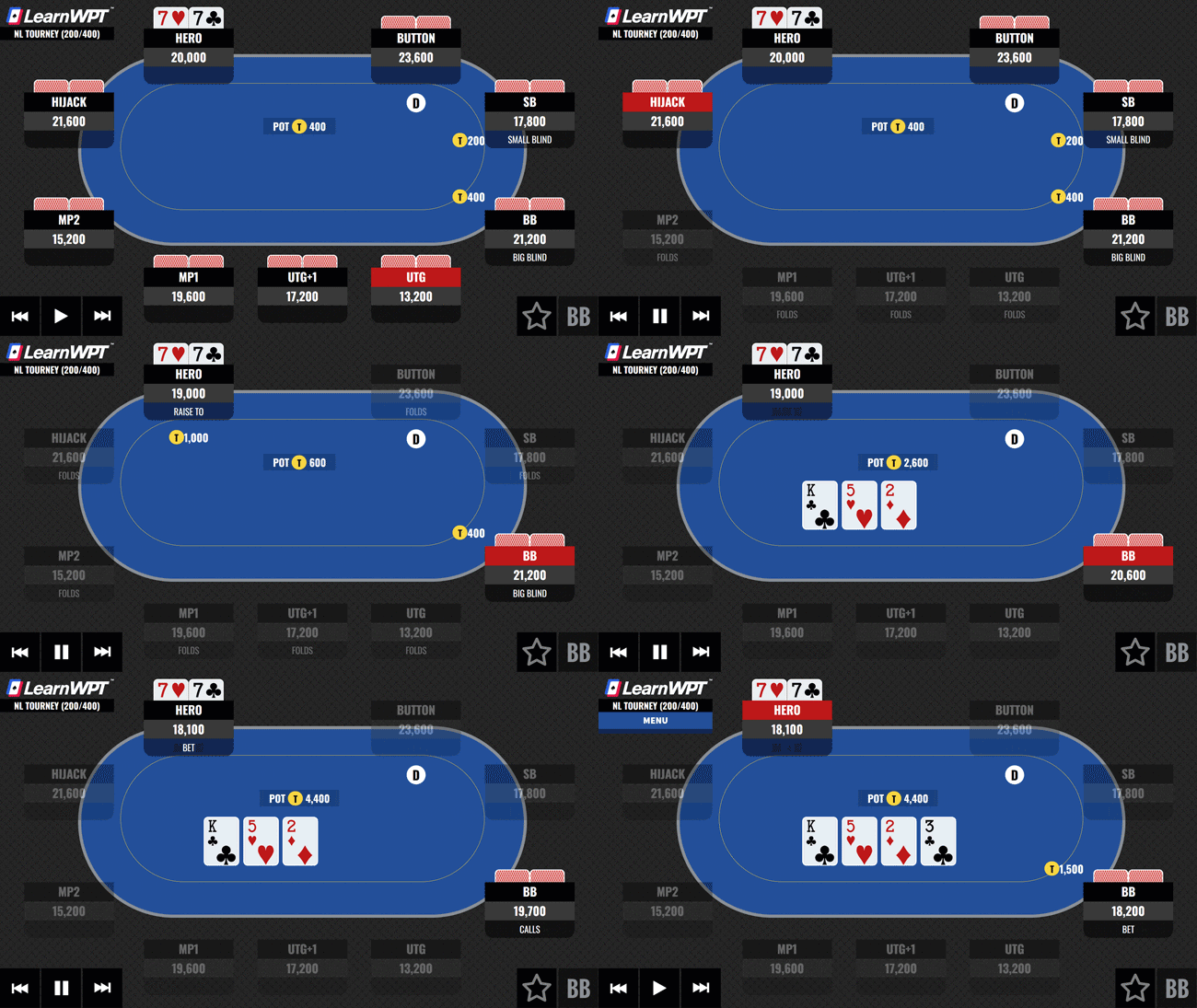
DECISION POINT: You are in the early stages of a daily tournament and you don’t have any significant reads on your tablemates, with the exception that most have been showing down reasonable hands. The blinds are 200/400 with a 400 big blind ante and you have 20,000 chips to start the hand. The action folds to you in the Cutoff with 7♥7♣, you open to 1,000, and only the Big Blind calls. Your opponent checks the K♣5♥2♦ flop, you c-bet 900, and they call. On the 3♣ turn, the Big Blind leads out for 1,500. Action is on you — what do you do here?

PRO ANSWER: We are in the earlier stages of a daily tournament with blinds of 200/400 and a 400 big blind ante. Most of the players have been showing down reasonable hands when we’ve had the opportunity to see them, and we haven’t developed any significant reads to this point in the session.

With 20,000 chips to start the hand in the Cutoff and 7♥7♣ we make a standard raise to 1,000 chips, and everyone folds to the Big Blind who just calls. The flop is K♣5♥2♦ and the Big Blind checks to us. This is a board where the preflop raiser from the Cutoff will have a significant range advantage and we will frequently continuation bet with our entire range. In game we make the preferred choice and bet 900 into the 2,600 pot, and the Big Blind just calls.

The turn is the 3♣ and surprisingly, our opponent leads for 1,500. When an opponent takes a line where they lead into the aggressor on the turn, there are often one of several factors at play.

First, the Big Blind will often lead the turn when picking up additional equity, which in this case would mostly be flush draws but does include some Ax, 6x, and 4x hands.

Continued below...

Banner Ad-Launch 50Off-Summer50

Second, they could have turned two-pair or better with hands including A4, K3, 33, 53, and 32s, and are trying to build a pot fearing we may not fire again on this board texture. Lastly, this turn lead may be intended to to deny equity since we are betting such a wide range on the flop. Many of the 5x combos in the Big Blind’s range benefit greatly from generating folds from some of our random overcards such QJo that still have significant equity.

Given these assumptions, the Big Blind’s leading range likely consists of some draws, some bigger hands, and some medium-strength hands looking to clear out equity. Our pocket sevens are doing fairly well against that range. However, there is little reason to raise as our opponent is likely to fold medium-strength hands we dominate, continue with the hands that dominate us, and proceed with draws only if getting the correct price.

Calling is the best play.

How would you play it?
Share your answer in the comments below!


Improve Your Game Today!
Join LearnWPT and Get:

LearnWPT-Multiple-Devices

  • The WPT GTO Trainer to play real solved hands and get instant feedback on YOUR leaks (over 4 BILLION solved spots!)
  • On-demand access to our full library of 500+ (and growing) in-depth Strategy Episodes from world-class players
  • All of your poker questions answered with the Ask a Pro Feature
  • Expert analysis from LearnWPT Pros using The Hand Input Tool
  • Downloadable Tools you can use at and away from the tables
  • Learn from a Team of world-class Professional Players


To join (just $5 your 1st month) click the JOIN NOW button and start improving your game!


Have Questions about LearnWPT?
Email us at [email protected].


Poker Quiz! At the WSOP With A♠T♠ vs a Pro, What Do You Do?

At-WSOP-AT-Vs-Pro

DECISION POINT: You are in the early stages of a multi-day tournament at the World Series of Poker with late registration and reentry still available. Most players have around 50 big blinds but you’ve worked your stack up to 100BBs. The action folds around to you in the Cutoff with A♠T♠ and you make a standard raise to 1,000. The Button, who is an accomplished Pro and has a 105BB stack, calls and the Blinds fold. The flop comes Q♣5♠4♥ and action is on you.

What do you do here?

PRO ANSWER: We are playing a multi-day event at the World Series of Poker. The tournament is in the early stages with late registration still open and players are allowed to reenter. Most players have around 50 big blinds but we’ve managed to work our stack up to 100BBs. The Button is a very studied Pro. The blinds are 200/400 with a 400 big blind ante and we are dealt A♠T♠ in the Cutoff. The action folds to us and we make a standard raise to 1,000. The Button decides to call and both Blinds fold. The flop is Q♣5♠4♥ and we are first to act.

The primary driver of continuation betting frequency on the flop is range advantage. Many players make the mistake of assuming that just because we are the preflop raiser, we have a range advantage on dry boards such as this one. Position is a key factor to consider in c-betting spots, and had we raised in Early Position instead of the Cutoff we certainly would have a range advantage on this board. However, in this specific situation we have a wide uncapped range and our opponent has a significantly narrower range that is capped and condensed.

Reviewing this spot in a solver after the hand we see that the Button actually defends with less than half as many hand combinations as we raise with from the Cutoff (215 vs 450) and has a slight range advantage (51% vs 49%) on the flop before any action takes place.

Continued Below...

Banner Ad-Launch 50Off-Summer50

This happens most frequently in Cutoff opens vs Button call and Small Blind vs Big Blind scenarios. When facing skilled and aggressive players in these situations who are capable of utilizing their position appropriately, we should check the flop quite frequently. In fact, based on the solver results the Cutoff checks with the entire range around 85% of the time. It’s very important to note that checking here doesn’t mean giving up. We should be checking some of our big hands to protect our checking range and add some check-raising with some strong value hands and bluffs such A2s/A3s on this particular board. Check-calling on the flop also makes up a portion of our strategy, particularly against smaller bet sizes.

If our opponent on the Button was a more passive recreational player in this spot the strategy would change significantly. There would be more merit to betting because a passive opponent would likely be calling preflop with a much wider range, negating the range advantage a more narrow and condensed range has on this board, and they would be far less likely to float and raise the flop with the appropriate tendencies to discourage us from continuation betting.

Against tougher players it’s very important to recognize these spots as high frequency checks or we will quickly bleed chips to good players who utilize position well.

Checking is the best play.

How would you play it?
Share your answer in the comments below!


Will YOU Be Our Next Bracelet Winner?

LearnWPT Students consistently crush the Summer Poker Season (including 2 WSOP Bracelets in 2024!) bringing home massive scores and achieving their poker dreams.

WSOP Success 2023 and 2024 - Sean-TJ-Tammy

In fact, in just the past 3 years alone during the summer in Vegas LearnWPT Students have achieved:

🥇 4 WSOP BRACELETS (not 1, not 2, not 3, yes 4!)
🏆 6 WSOP Final Tables
💪 1 Around Town Win
👏 9 Around Town Final Tables
💰 Over $1.7 Million in Cashes

Ready to be our next success story?

Become a LearnWPT.com Member now for just $5 your 1st month and start your journey to becoming a WSOP Champion.

If you have any questions regarding LearnWPT send the Support Team an email at [email protected] and we'll be happy to help.

How Valuable Is a Live Lab Seat?

So just HOW VALUABLE is a seat to the May 24th LearnWPT Live Poker Lab in Vegas? GAIN $4700 WORTH OF VALUE FOR JUST $1997!

Let's break it down...

1-Day in the Live Poker Lab = $2997 (Buy Now and Save $1000!)
6 Months LearnWPT.com Platinum Membership = $594 (included)
1st Place in the Wynn Seat Satellite = $1100 (1 in 9 chance)
Total Poker Lab Seat + Satellite Win = $4691 of Value

And that’s just the IMMEDIATE VALUE you receive by securing your seat during our $1000 Discount Offer*, valid through May 15th.

Watch This Video for a Full Breakdown

Your seat to the May 24th Live Lab at Wynn Las Vegas gives you up-close and personal training (limited to 9 students) from renowned poker author and coach, Eric "Rizen" Lynch and poker Triple Crown winner and subject of the BBC Scotland documentary The Four Rules of the Poker Kings, Niall "Firaldo87" Farrell. PLUS you’ll have a 1 in 9 chance to win an $1100 seat to a Wynn Tournament and parlay your training investment into a big score! What else will you gain?

Personalized Report and Training Accessible Online

Personalized report identifying critical strategic leaks that lead to early exits and depleted chip stacks
Hands-on coaching and feedback from professional players in a collaborative environment during Instructor Lab Sessions
Lifetime access to recorded video commentary of strategy experts analyzing your moves in real-time


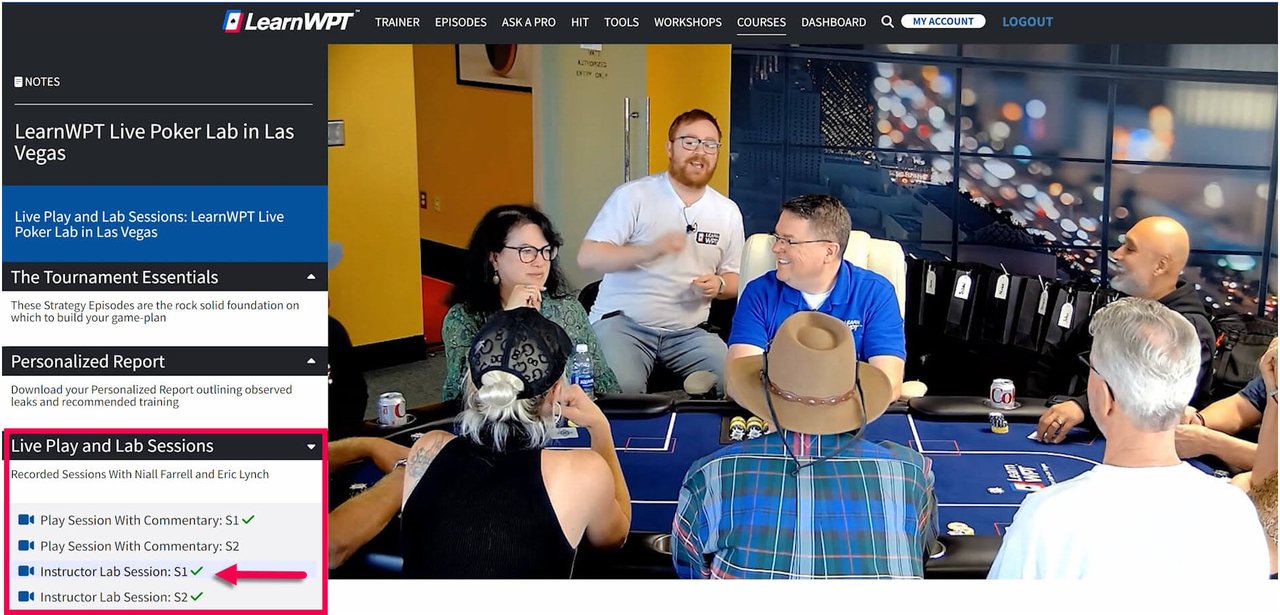
course - lab session - border (1)

Recorded Lab Session Instruction With Niall and Eric

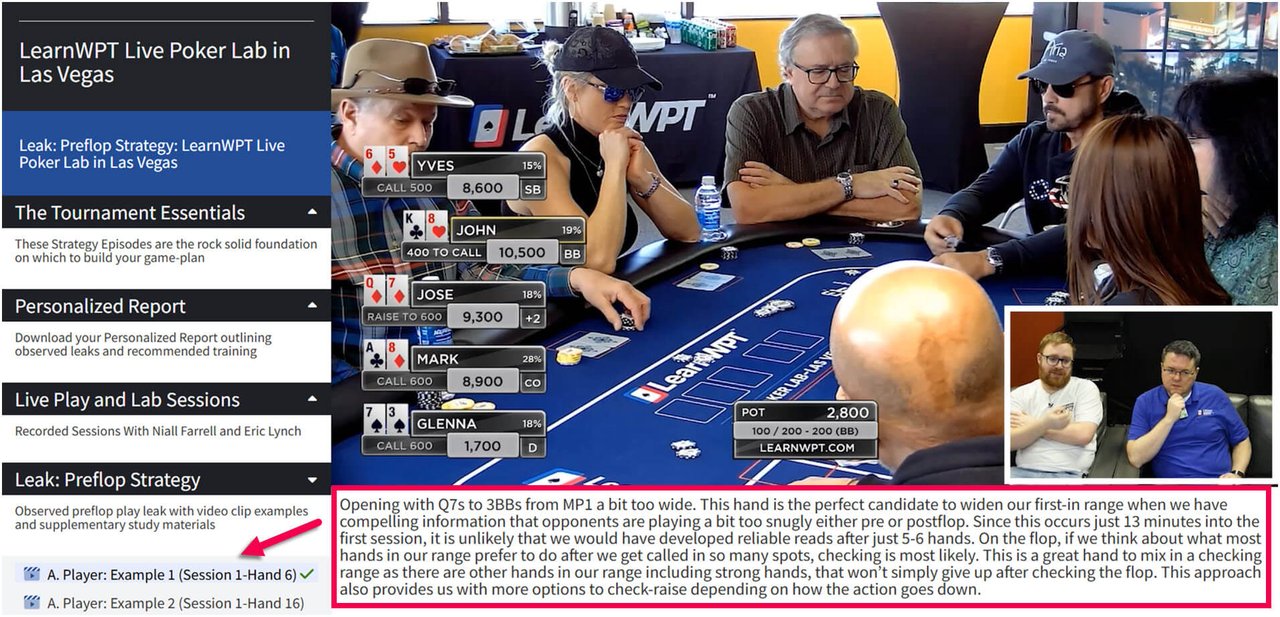
Examples of errors in your game with in-depth video clips of hands you played with written analysis
Customized post event training plan featuring Strategy Episodes, Trainer Packs, Tools, and dedicated Ask a Pro Discord Channel
Lifetime access to your Personalized Report including professionally produced videos of all Play and Lab Sessions (full day of commentary and instruction!)

course - play session - border (1)

Lab Session and Play Session Video Clips of Leaks

6 Months of Platinum access to LearnWPT.com online training site (a $594 Value) to continue your training
Entry in our 9 player satellite directly following the event with a Wynn Tournament Seat as 1st prize (a $1100 Value)
BONUS the Satellite winner can register for the Wynn Summer Classic $1.5M GTD event on Sunday, May 25th!
And through May 15th YOU CAN SAVE $1000 off the list price


Wynn Summer Classic 2025

Play to Win a Wynn Tournament Seat Worth $1100

All this for investing just 1 day toward improving your game and learning directly from Poker Champions who understand what it takes to win tournaments. In fact, there’s really no way to measure just how much you might gain from plugging the costly leaks that can only be uncovered by deep analysis of your play.

You might unlock a whole new level of confidence and creativity in your poker game, just in time for the summer poker season.

If you have any questions or need assistance please reply back to this email or email [email protected] and we will be happy to help.

See you in Vegas,
Team LearnWPT


*Offer valid through May 15, 2025 at 11:59 PM PDT or until sold out. Discount is taken off list price. Offer can not be combined with other discounts. **The Wynn Las Vegas Championship Tournament Entry Satellite is not open to the general public. This opportunity is exclusive to attendees of the May 24, 2025 LearnWPT Live Lab event held in Las Vegas. The $1100 Wynn Las Vegas Tournament Entry Satellite prizes are non-transferable and have no cash value. Travel, food, and lodging are not included. The winner must play the awarded event seat within the prescribed prize redemption period, before December 31, 2025 or the prize will be voided. See our FAQ section for more information.

Posted on Tags

Poker Quiz! In Early Position With J♥J♦, What Do You Do?

in-early-position-jj


DECISION POINT: You are in the middle stages of a daily tournament with over 50% of the field still remaining and 500/1,000 blinds with a 1,000 big blind ante. Most players at your table have 20-40BBs and you are relatively new to the table with no significant reads on your opponents. From Under the Gun you make the standard 2.2x open raise to 2,200 with J♥J♦. Players in Middle Position, Hijack, and Button all call. The flop comes 9♥8♦8♠ and action is on you.

What do you do here?

PRO ANSWER: We are playing in a daily tournament at a local casino. It is the middle stages of the tournament with just over 50% of the field remaining. Most of the players at our table have 20-40 big blinds and we are relatively new to this table with no significant reads. The blinds are 500/1,000 with a 1,000 big blind ante.

We are dealt J♥J♦ UTG and make a standard open to 2,200 chips. The player to our immediate left calls, as do the Hijack and the Button. Everyone folds and we go four ways to the flop.

The flop is 9♥8♦8♠. Playing multiway pots out of position can be extremely tricky. With a SPR (stack to pot ratio) of around 2 and holding an overpair, it’s going to be very difficult to get away from our hand without some sort of significant action from multiple players still left to act behind us. When deciding if we should c-bet or check, it is important to think of what our entire range wants to do in this spot.

Continued below...

StaticAd-Episodes-300x250-version2

The default range from UTG consists mostly of bigger overcards and overpairs, and while we do have some 77/A9s/A8s type hands as well, the overcards and overpairs will make up the majority of hands. Our opponents are much more likely to have condensed ranges that connect with this board in some way. For that reason, most of our range prefers to check in this spot.

Many players mistake checking for weakness or giving up here, and that’s simply not true. Depending on how the action unfolds behind us there are several options to continue including check-raise, check-call, or check-fold if multiple opponents go all-in before it’s back around to us. By checking, we allow our opponents to take stabs at the pot with hands they otherwise might fold to a bet, such as 66/55 or even some ace-high hands.

Our hand does benefit from protection, so if we were to lead at all in this spot, hands like JJ/TT/A9s would make the most sense. We become very easy to play against if we bet all of our made hands and check all of our misses, and our range is made up of far more overcards and misses than big hands and overpairs.

Checking is the best play.

How would you play it?
Share your answer in the comments below!


Improve Your Game Today!
Join LearnWPT and Get:

LearnWPT-Multiple-Devices

  • The WPT GTO Trainer to play real solved hands and get instant feedback on YOUR leaks (over 4 BILLION solved spots!)
  • On-demand access to our full library of 500+ (and growing) in-depth Strategy Episodes from world-class players
  • All of your poker questions answered with the Ask a Pro Feature
  • Expert analysis from LearnWPT Pros using The Hand Input Tool
  • Downloadable Tools you can use at and away from the tables
  • Learn from a Team of world-class Professional Players


To join (just $5 your 1st month) click the JOIN NOW button and start improving your game!


Have Questions about LearnWPT?
Email us at [email protected].